

TL;DR: In the GrapheneOS vs CalyxOS vs LineageOS comparison, choose GrapheneOS for the strongest security and privacy (Google Pixel only), CalyxOS for a balanced de-Googled phone with optional microG, and LineageOS for the widest device support. GrapheneOS is the safest default in 2026; LineageOS is the most flexible across hardware.
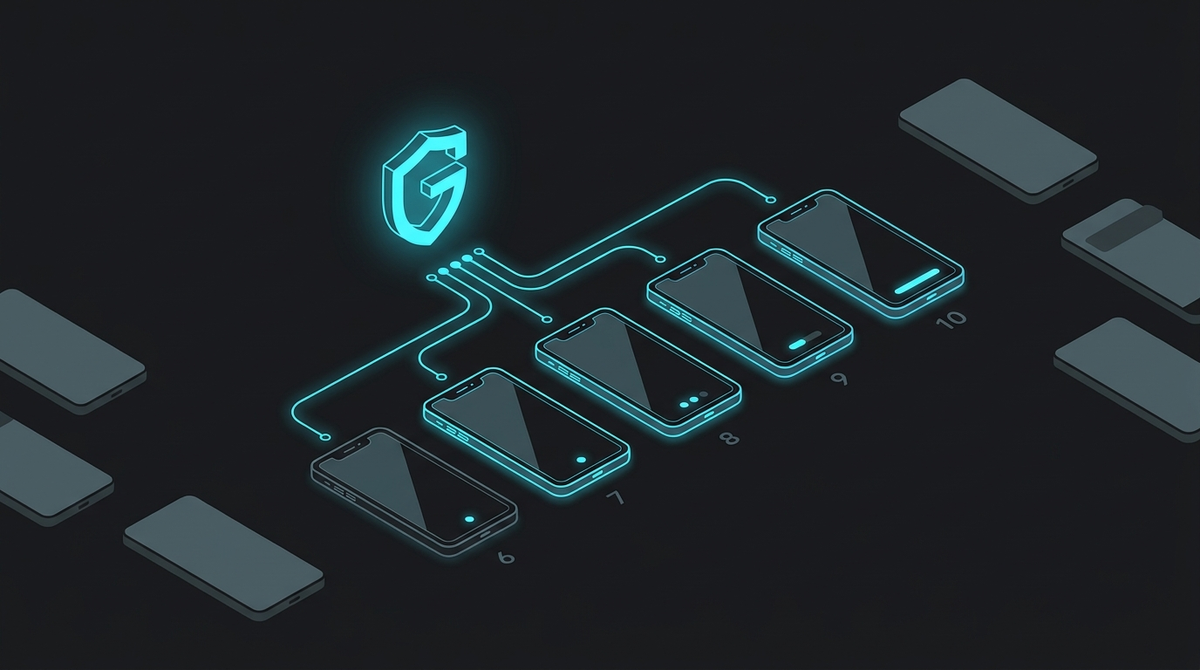
By the PrivacyPortal team. Last updated June 2026.
De-Googled Android ROMs replace Google's stock software with a build that removes or sandboxes Google's services, handing control of your data back to you. In 2026 the GrapheneOS vs CalyxOS vs LineageOS decision comes down to three clear niches. GrapheneOS is the security-hardened option and runs only on Google Pixel phones. CalyxOS is the balanced, approachable de-Googled experience with optional microG, available on Pixel, Fairphone and some Motorola moto g models. LineageOS is the general-purpose, widest-compatibility ROM — it supports 190+ devices but ships no privacy hardening, microG or root by default. This de-Googled ROM comparison breaks down each project, who it suits, and how to install GrapheneOS step by step, so you can pick the best custom ROM in 2026 for your device and threat model.
If you would rather not flash one yourself, our de-Googled privacy phones arrive with GrapheneOS, CalyxOS or /e/OS installed and tested, and each listing names the exact model.
Image: the GrapheneOS, CalyxOS and LineageOS logos side by side on three handsets, illustrating the three-way comparison.
GrapheneOS vs CalyxOS vs LineageOS: a de-Googled ROM comparison
Each ROM is built around a different goal: GrapheneOS for security, CalyxOS for a convenient Google-free daily driver, and LineageOS for sheer device coverage and longevity. The table below is our quick reference, reflecting how these projects actually behave as of June 2026.
| Feature | GrapheneOS | CalyxOS | LineageOS |
|---|---|---|---|
| Best for | Maximum security & privacy | Balanced de-Googling with app compatibility | Widest device support & old-phone longevity |
| Supported devices | Google Pixel 6–10 families only | Pixel, Fairphone, select Motorola moto g | ~190+ devices, many brands |
| microG / Google-free | No microG; sandboxed Google Play optional | microG bundled, toggle on/off | None included (add manually) |
| Root by default | No (discouraged) | No | No (separate add-on) |
| Relock bootloader + verified boot | Yes, full rollback protection | Yes on Pixels | Usually not supported |
| Hardening | Hardened malloc, MTE, strict sandboxing | Moderate (AOSP plus extras) | Standard AOSP |
| 2026 status | Active, frequent releases | Rebuilding after Aug 2025 pause | Active weekly builds |
GrapheneOS: the security-hardened pick (Pixel only)
GrapheneOS is the most security-focused de-Googled ROM available. It replaces core system components with hardened versions — a hardened memory allocator, stricter app sandboxing, and support for ARM Memory Tagging Extension (MTE) — and it lets you relock the bootloader so verified boot protects the OS with rollback protection. It ships no Google services at all, but offers sandboxed Google Play: you can install Play Services as an ordinary, permission-limited app if you need it.
GrapheneOS supports only Google Pixel 6 through Pixel 10 devices, because it requires a StrongBox secure element, ARM memory tagging (MTE) and verified boot with rollback protection.
What actually happens in daily use: most apps run normally, and many banking apps work via sandboxed Play. We can't promise any specific bank's app will pass its checks, because Play Integrity attestation is the bank's call, not ours. GrapheneOS does not provide root, by design.
Image: a Pixel running GrapheneOS at the home screen, showing the minimal default app set.
CalyxOS: balanced de-Googling with microG
CalyxOS aims for a comfortable middle ground. It bundles microG — a free, open reimplementation of Google Play Services — which you can switch on for push notifications and location, or leave off for a fully Google-free phone. It supports Pixel, Fairphone and select Motorola moto g devices, and on Pixels it also supports verified boot with a relocked bootloader.
CalyxOS announced its return from the hiatus on 1 July 2026. Its September 2026 release news lists Android 16-based security updates for supported devices. Older installations may need a clean installation to join the maintained release stream.
In the CalyxOS vs GrapheneOS question, Calyx trades some of GrapheneOS's hardening for the convenience of built-in microG and broader hardware. CalyxOS resumed maintained releases in July 2026. Check the exact model, installed release and migration requirements rather than relying on its historical hiatus status. Before buying hardware specifically for CalyxOS, check the current status on the CalyxOS project site to confirm your device has fresh builds.
LineageOS: the widest device support
LineageOS is the long-running, general-purpose successor to CyanogenMod. It is a customisation and longevity project first, not a privacy-hardened one — it keeps older and more obscure phones alive long after the manufacturer abandons them.
LineageOS officially supports roughly 190+ devices across dozens of brands, yet ships with no microG and no root access by default.
That breadth is the appeal: if your phone isn't a Pixel, Fairphone or supported Motorola, LineageOS is often your only realistic de-Googled route. You can add microG and root yourself, but you're assembling a private Android ROM by hand rather than getting one out of the box. On most non-Pixel hardware you also can't relock the bootloader with custom keys, so verified boot won't protect you the way it does on GrapheneOS. Check your model on the official LineageOS device list before committing.
Which de-Googled ROM should you choose?
The best custom ROM in 2026 depends on your device and threat model, not on which project is "best" in the abstract. Use this quick decision framework:
- Choose GrapheneOS if you own (or will buy) a Pixel 6–10 and want the strongest security — useful for sensitive work, high-risk roles, or simply peace of mind.
- Choose CalyxOS if you want microG convenience on a Pixel, Fairphone or supported Motorola, and you're comfortable with a slower 2026 update cadence.
- Choose LineageOS if your device isn't supported by the other two, you're reviving older hardware, and you're happy to add privacy features yourself.
If you'd rather skip flashing entirely, we sell pre-installed, de-Googled Pixel phones that arrive ready to use. New to all this? Start with our beginner's guide to de-Googled Android.
Before you flash: risks, warranty and a backup checklist
Flashing a custom ROM is powerful but genuinely risky. Read this before you touch your phone.
- Back up everything first. Unlocking the bootloader wipes all data on the device — photos, messages, app data, the lot.
- Bricking is real. A wrong image, an interrupted flash, or locking the bootloader on an unofficial build can leave a device unbootable.
- Warranty and OTA. Unlocking may void warranty and will stop stock over-the-air updates; you update through the ROM instead.
- Banking and Play Integrity. Some banking, payment and DRM apps detect modified systems. No ROM can guarantee a given app will work — test before relying on it. See how Play Integrity affects banking apps.
- Carrier-locked devices. If "OEM unlocking" is greyed out, you usually cannot proceed at all.
- Security. Leaving the bootloader unlocked weakens device security; only ROMs that support relocking (GrapheneOS, CalyxOS on Pixel) restore verified boot.
How to install a de-Googled ROM: GrapheneOS on a Pixel
GrapheneOS has the most reliable, beginner-friendly install path because its official web installer runs in your browser. Here's the real process. Everything you need — the GrapheneOS web installer, Android platform-tools, the Auditor attestation app, and Aurora Store for installing apps without a Google account — is linked in the Modules, apps & files to try section below.
Prerequisites:
- A supported Pixel (Pixel 6 or newer), charged above 50%.
- A computer and a known-good USB-C data cable.
- A current Chromium-based browser (Chrome, Edge, Brave) — the installer uses WebUSB.
- A complete backup. The next steps will erase the phone.
Image: the GrapheneOS web installer open in a browser, with the device detected in fastboot mode.
- Back up your data to a computer or cloud, and sign out of accounts you'll want to re-add later.
- Enable Developer options: Settings → About phone → tap Build number seven times.
- Turn on OEM unlocking: Settings → System → Developer options → enable OEM unlocking.
- Boot into the bootloader: power off, then hold Volume Down + Power until the fastboot screen appears.
- Connect the phone to your computer and open the GrapheneOS official web installer.
-
Unlock the bootloader using the installer's unlock button (or
fastboot flashing unlock). Confirm on the phone. This wipes the device. - Flash GrapheneOS: click the flash button and wait. Do not disconnect the cable until it reports success.
-
Relock the bootloader with the installer's lock button (or
fastboot flashing lock). This re-enables verified boot — skipping it leaves you less secure. - Reboot and complete setup. Optionally disable OEM unlocking again afterwards for extra protection.
Verify it worked: reboot to the bootloader and confirm the device state reads locked. Then install the GrapheneOS Auditor app and run a local attestation — a passing result confirms verified boot is using GrapheneOS keys and the device is in a trusted state. Install your other apps via Aurora Store or F-Droid without a Google account.
Frequently asked questions
Is GrapheneOS better than CalyxOS?
For security, yes — GrapheneOS has stronger hardening and a more consistent 2026 release schedule. For convenience, CalyxOS bundles microG out of the box and supports non-Pixel hardware like Fairphone. The "better" choice depends on whether you prioritise maximum security or built-in Google-compatible services.
Can I install GrapheneOS on a non-Pixel phone?
No. GrapheneOS runs only on Google Pixel 6 through Pixel 10 devices because it depends on hardware features — a StrongBox secure element, MTE, and verified boot with rollback protection — that it says only current Pixels reliably provide. On other phones, LineageOS is usually your best de-Googled option.
Does LineageOS include Google apps or microG?
Neither, by default. LineageOS ships clean, with no Google Play services, no microG and no root. You can add microG or Google apps separately, but you do it yourself, which is why LineageOS is a customisation project rather than a privacy-hardened one.
Will my banking apps work on a de-Googled ROM?
Often, but not always, and we can't promise any specific bank's app will pass its checks. Apps that use Play Integrity may detect a modified system. GrapheneOS with sandboxed Google Play has the best track record in practice — always test before you depend on it.
Is CalyxOS dead in 2026?
No. CalyxOS announced its return on 1 July 2026, and its September release news lists current Android 16 security updates. Check your exact device and migration requirements, especially if you still use an old pre-return build.
Which is the best de-Googled ROM for beginners?
GrapheneOS, if you have a Pixel — its browser-based installer and relockable bootloader make it the most foolproof secure setup. If you want microG without much fiddling and own supported hardware, CalyxOS is the gentler everyday choice.
PrivacyPortal sells ready-to-use, de-Googled GrapheneOS Pixels — hardened, kept updated, and shipped with our encrypted Graphite messenger. Browse privacy phones →
CalyxOS status checked on 28 September 2026 against the official return announcement and current release news.


